Construction AI Brief
Construction AI: Balfour Beatty buys a seat at the startup table, and Turner & Townsend counts what the data centre boom is doing to everyone else's projects
Balfour Beatty put £10m into Pi Labs' Fund IV on 7 July, its first ever venture capital investment, buying early sight of up to 50 AI, data and robotics startups. Turner & Townsend's global market report, covered on 8 July, says AI infrastructure is now squeezing construction capacity worldwide, with data centres the UK's second most in-demand sector. And Anthropic published the detail of Fable 5's cyber safeguards, including a four-tier jailbreak severity scale.
AI-assistedPrepared with AI assistance and human editorial review.
Today’s context: This brief covers the latest movements in AI tooling, adoption and signals for construction teams. Read on for what matters and what to focus on.
Industry Readiness — Featured
Balfour Beatty puts £10m into Pi Labs, and the adoption story moves from the org chart to the balance sheet
Balfour Beatty announced on Monday 7 July that it's investing £10m in Pi Labs' Fund IV, an early-stage venture capital fund focused on built environment technology. Construction Enquirer, New Civil Engineer and Construction News all carried it the same day. Fund IV will back up to 50 early-stage companies across AI, data and robotics, scaling from the UK, Europe and North America, and Balfour Beatty joins a group of strategic investors that includes Dar Ventures, the venture arm of design giant Sidara, and Dubai developer Ellington Properties. The detail worth pausing on: this is the first time Balfour Beatty has ever invested in a venture capital fund. A tier one with a £9bn-plus order book has decided that writing a cheque to a VC is now core business.
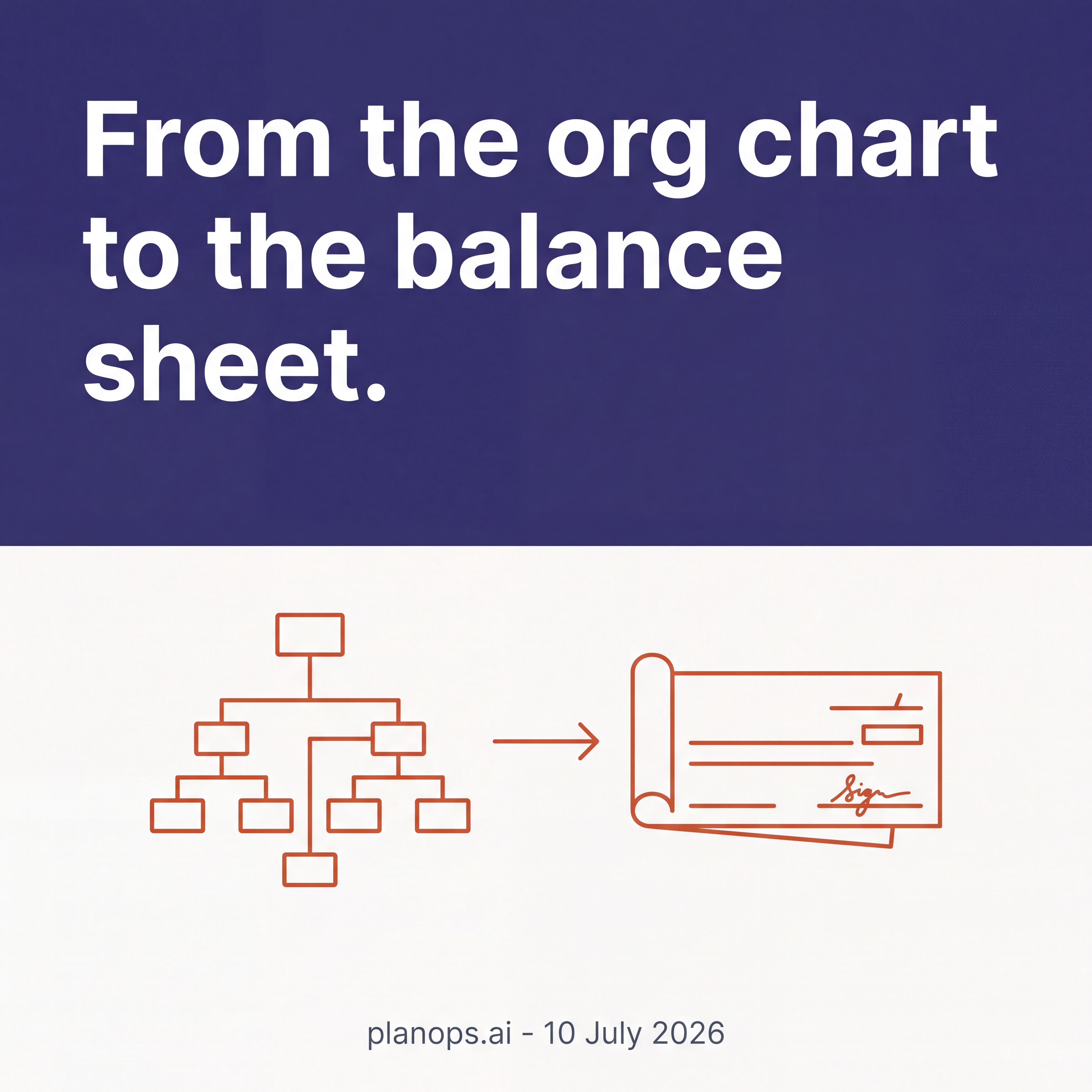
So, put this next to the last fortnight. NG Bailey created a chief AI officer. Kier hired a head of data and analytics. Laing O'Rourke is recruiting for AI leadership. That was the org chart responding. This is the balance sheet responding, and it's a different kind of signal, because a job title costs a salary while a fund commitment costs £10m and locks you in for the fund's life. What Balfour Beatty is actually buying is deal flow: early sight of fifty startups before they're polished enough to cold-call a contractor's innovation team, and the option to pilot, partner or acquire while the price is still sensible. Pi Labs has made over 100 investments across 15 countries since it started, so the pipeline is real rather than aspirational. I've watched contractors evaluate construction AI by whoever happened to exhibit at the last trade show, and honestly, a structured filter beats that even if a third of the fund's bets go nowhere. That's rather the point of a fund.
The question I'd ask, and it's the one an editor might cut, is whether £10m of LP money buys influence or just information. Strategic investors in venture funds get visibility; they don't get to steer what the startups build. But for the mid-tier contractor reading this, the lesson isn't to go and find a VC. It's that the biggest player in UK contracting has decided tool selection is too important to do reactively, and has paid to see around the corner. Your version of that can be much cheaper: a named person, a quarterly scan, a decision log for what you trialled and why you dropped it. The site teams end up using whatever gets picked either way; the difference is whether it was picked or whether it just arrived.
For your board pack: Ask who in your business saw the last three construction AI tools before a salesperson introduced them. If the answer is nobody, that's the gap Balfour Beatty just paid £10m to close, and a one-page scanning process closes most of it for you.
Data Centres
Turner & Townsend puts numbers on the squeeze: data centres are now second only to defence in UK demand
Turner & Townsend published its 17th annual Global Construction Market Intelligence report this week, and New Civil Engineer covered it on Wednesday 8 July. The dataset is broad, 112 markets across 44 countries, and the headline is blunt: the growth of AI infrastructure, data centres above all, is squeezing global construction capacity. Data centres are now the most capacity-constrained sector worldwide, with over 70% of surveyed markets reporting tight or overstretched contractor capacity. In the UK the sector has climbed to second most in-demand, behind defence and ahead of industrial and logistics. The report describes a two-speed market: AI-driven work racing ahead while residential and commercial sit on their hands waiting for investor confidence to return. Bloomberg ran a parallel story the same day on the US, where the labour crunch is now the binding constraint on data centre delivery, so this is a global pattern rather than a British quirk.
Regular readers will know this brief has tracked the pipeline side for weeks, Ebbsfleet's £3bn campus, Loughton, the NSIP reforms that take effect on 24 July. What the T&T report adds is the other half of the ledger: who actually builds all of it. The schemes aren't the scarce resource anymore, the people are. And here's the bit that matters if you never touch a data hall: the squeeze prices everyone's projects, because the M&E fitter, the commissioning engineer and the high-voltage jointer a hyperscaler poaches were on somebody's hospital or school programme first. What we've found on capacity-constrained bids is that the tender price tells you less than the resourcing plan behind it, and right now the resourcing plans are being quietly rewritten across the south east.
I'll hedge honestly: T&T sells programme management to exactly the clients this report alarms, so the framing serves them. But the survey base is big, the direction matches what the Yorkshire Post and others pulled from the same data, and it matches what anyone pricing MEP packages this summer already knows. The consultants aren't inventing the shortage; they're measuring it. For the person doing the workforce planning, this lands as a simple question: which of your key trades can a data centre contractor outbid this year, and what's your retention answer when they try?
The tender-desk view: Reprice the labour assumptions in any bid running past 2027 against data centre competition for the same trades, especially MEP and commissioning. A programme built on 2025 availability rates is a claim waiting to happen.
Security & Governance
Anthropic writes down how Fable 5 decides what to block, and that makes it a procurement question (a dated update)
A dated update to last Friday's item on Fable 5's return. On 2 July, the day the model came back into general availability, Anthropic published the detail of its cybersecurity safeguards, and the detail is more interesting than the headline. Rather than refusing everything security-flavoured, Fable 5's classifiers sort cyber requests into four categories. Ransomware, wipers, malware development and command-and-control infrastructure are always blocked. High-uplift dual-use work, penetration testing, exploit development, privilege escalation, is blocked pending better authorisation controls, meaning Anthropic wants a way to verify you're a legitimate security team before switching it on. Alongside that, the company proposed a draft Cyber Jailbreak Severity scale, CJS-0 to CJS-4, scoring jailbreaks on capability gain, breadth, ease of weaponisation and discoverability, and opened a HackerOne programme paying researchers to find cyber jailbreaks in Fable 5.
So why does a construction brief care? Because this is the first time a frontier lab has published, in checkable form, the decision logic for what its most capable model will and won't do in a dual-use domain, and dual-use is exactly where construction's awkward AI questions live. Site security assessments, building services vulnerability reviews, anything touching operational technology in a smart building: the same capability that helps your FM team harden a BMS helps someone else attack one. A published safeguards policy means the behaviour is documented, versioned and testable rather than folk knowledge gathered from whichever prompt worked last Tuesday. I think the severity scale matters more long-term than the classifiers, because a shared language for how bad is this jailbreak is the kind of dull standardisation that governance actually runs on. The comparison to CVSS scoring in conventional security is obvious, and for once the comparison mostly holds.
The practical read for a UK contractor is short. Your AI tools sit on top of these models, and your clients' security questionnaires are starting to ask what the model underneath will refuse to do. Until now the honest answer was a shrug. Now there's a document, and the vendors who can point to it will clear pre-qualification faster than the ones who can't. The person filling in the SAQ deserves that answer in writing.
Practical bit: Send the Fable 5 safeguards page to whoever owns your IT security questionnaire responses, and add one line to your AI vendor assessment: which published safeguards policy covers the underlying model, and what happens to dual-use requests.
Adoption & Evidence
The closer: capital, capacity and controls are the same story
One thread runs through today's three items: the AI era of construction is being decided by boring institutional machinery, not demos. Balfour Beatty built a machine for choosing tools. Turner & Townsend measured the machine that builds the infrastructure, and found it short of people. Anthropic documented the machine that decides what the models will refuse. None of it is glamorous. All of it is the stuff your competitors will quietly get right or wrong over the next year, and the gap will show up in bid margins and staff retention long before it shows up in a press release.
The response fits on a page, as usual. A named owner and a scanning routine for new tools, so selection stops being accidental. Labour assumptions repriced against data centre competition on anything running past 2027. One added line in your vendor assessments about published model safeguards. Small, checkable, done this month. That's what it's about.
Today's action: Pick the weakest of the three in your business, tool selection, labour planning or AI vendor assurance, and give it an owner by Friday.
Source: Balfour Beatty invests £10 million in Pi Labs (Balfour Beatty, 7 July 2026) →
What matters most
- →"Balfour Beatty just changed how a tier one buys innovation: from piloting whatever knocks on the door to paying for early sight of the whole deal flow. If you're a contractor without a filter for construction AI, the gap between you and the firms that have one is now measured in years of early access, not months."
- →"The data centre boom is no longer just an order book story, it's a labour market story. Turner & Townsend's numbers say the schemes in your pipeline will be priced against a sector that can outbid you for the same MEP crews and commissioning engineers. Underwrite your programmes with that in mind."
- →"The safeguards detail on Fable 5 is the document your IT security lead should read before your next AI procurement round. Whether a model will refuse, allow or escalate dual-use requests is now written down and versioned, which makes it checkable, which makes it a procurement criterion."
Ready to put AI to work on your projects?
50 free Intelligence Units. Set up your first project in under 20 minutes. No credit card needed.
Get 50 free Intelligence UnitsGet the brief by email
Daily practical AI insight for construction teams. What changed, why it matters, and what to ignore.
50 free Intelligence Units - automate your programme admin
Why PlanOps publishes this
We help construction teams turn AI into useful work, not noise. Understanding what’s changing in AI is the first step. Making it work on-site is the real difference.
Found this useful? Share it.